
1. Regenerative Landscapes: From “Landscape Creation” to “Soil Nourishment”
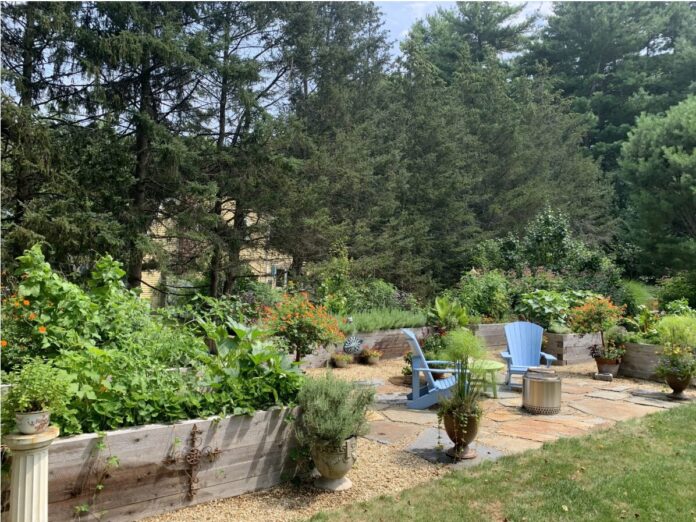
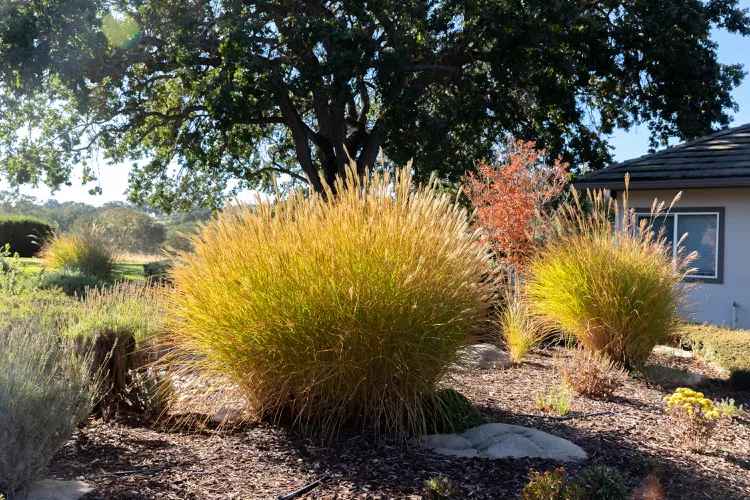
The goal of regenerative landscapes is to adapt to, restore, rather than deplete the environment during design and construction. This involves enhancing soil health, increasing biodiversity, and improving rainwater infiltration and filtration to improve the local ecosystem, rather than simply pursuing superficial effects.
These projects often involve multiple stages, including native plant selection, soil reconstruction, minimizing disturbance, and water system management. They are far more complex than traditional “laying turf + planting a few trees” projects, thus requiring particularly systematic planning and management.
2. Key Pre-Construction Considerations: Access Routes and Overall Planning
1. Access and Material Stacking: First, Define “Only This Way” Routes
Any construction project will leave ruts, hardening, and compaction. Once soil is subjected to heavy compaction, its structure and microbial community can take years to recover.
- Before construction begins, demarcate vehicle access areas, parking areas, and material storage areas, concentrating them in a few existing hard surfaces or pressure-resistant areas as much as possible.
- Confirm these arrangements with all construction teams in advance. Even if it’s slightly “troublesome,” it avoids repeated trampling across the entire site.
This “route prefabrication” is the first line of defense against secondary damage to the land.
2. Project Manager: Keeping Everyone on the Same Blueprint
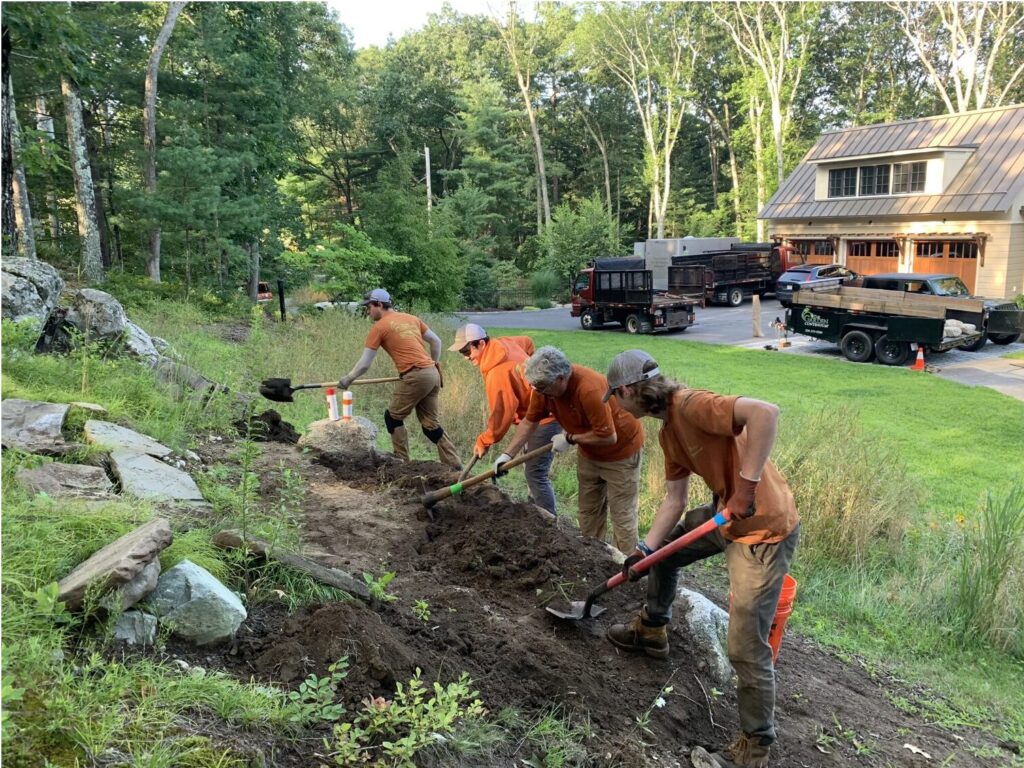
Regenerative landscapes often involve multiple parties, including designers, civil engineering teams, landscaping teams, plumbing and electrical companies, and nursery suppliers.
- A project manager familiar with the design intent, site details, client goals, and the needs of each trade is needed as the sole overall coordinator.
- All timelines, work sequence coordination, and on-site decisions are communicated uniformly through this central coordinator to avoid “individual actions” and “concurrent construction.”
This role needs to be involved throughout the entire process, from design concept development to final completion, rather than acting as a last-minute firefighter.
3. Collaboration and Understanding: Bridging the Gap Between “Traditional Construction” and “Regenerative Concepts”
1. Respecting Professionalism: Clearly Introducing Participants
Regenerative projects can easily spiral out of control due to too many participants—designers, general contractors, subcontractors, landscaping teams, well-meaning suggestions from the homeowner’s relatives who “know a little about landscaping”…
- At project initiation, clearly define the names, responsibilities, and decision-making chain of all participants to the homeowner.
- Agreement: Unless there is an emergency safety incident on site, do not arbitrarily change the plan without consulting the project manager and design team.
This demonstrates respect for industry professionalism and is the bottom line to ensure the project is not swayed by fragmented opinions.
2. Aligning Through Education: Turning Construction Teams into Partners in Regenerative Concepts
Traditional construction prioritizes efficiency and speed, while regenerative landscaping emphasizes observation, fine-tuning, and minimal disturbance. These two approaches inevitably create friction.
- Through focused pre-construction communication, ensure the construction team understands why vehicle restrictions are necessary and why certain areas should be bypassed rather than blocked.
- Clearly explain the relationship between each practice and “soil protection, water conservation, and ecosystem protection,” showing them that this isn’t “creating trouble,” but rather another professional standard.
When the construction team understands they are participating in a “land renewal” project, rather than simply creating a hardscape, they are more likely to cooperate on details.
4. Changes and Modifications: Maintaining the Project’s “Skeleton” Amidst Uncertainty
1. Communication Regarding Time, Materials, and Changes
Regenerative projects often encounter: discovering hidden roots or bedrock during excavation, temporary shortages of certain native plants in the nursery, or extreme weather disrupting the workflow.
- Explain to the client in advance: On-site discoveries and material fluctuations are normal; the plan will be slightly adjusted while “maintaining the core objectives.”
- Every adjustment should include a reason, the scope of impact, and alternative solutions, rather than “last-minute notices” or “post-hoc orders.”
Respecting the client’s decision-making pace is more important than “forcing” things before an unreasonable delivery deadline, because hasty decisions often damage long-term ecological performance.
2. Preventing “Construction Creep”: How Small Additions Can Become Big Loopholes
The so-called “construction creep” often begins with a simple request like, “Just add this for me while you’re at it,” or “Since the machines are here, why not dig this area too?”
- Through thorough preliminary data collection, site surveys, and budget estimates, discuss potential additions upfront.
- Stipulate in contracts and communications that any new work must be re-examined within the overall budget and ecological objectives, rather than being decided verbally on-site.
Spending a little more time and effort on wording upfront often results in fewer disputes and budget slippage later.
5. Two Case Studies on the Past and Present of “Soil”
1. New Housing on Forest Slopes: Rebuilding Soil from a “Barren Skeleton”
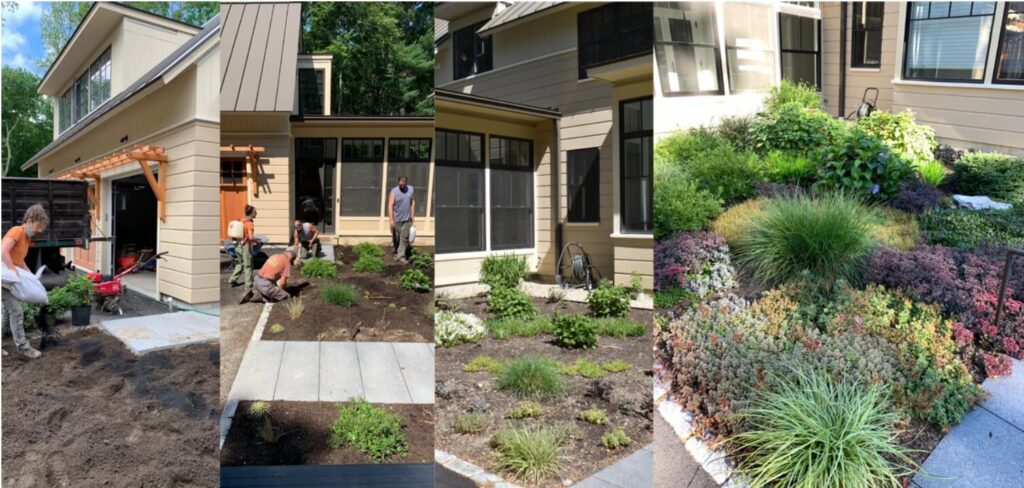
In one project, new houses were “embedded” in a young secondary forest: large areas of exposed bedrock, sandy soil, and the slope directly leading to the wetland system offered almost no foundation for lawns or garden plants.
The homeowner desired a pristine, regenerative-friendly landscape, so the team adopted a core approach of “first creating the soil, then the landscaping”:
- By adding organic matter, biochar, essential nutrients, and bio-inoculation agents, the team replenished the barren sandy soil with a “life-giving foundation.”
- A mixed planting of large, medium, and small native and mixed-origin plants, supplemented by a drip irrigation system to ensure a stable water supply during the hot, dry construction season.
The focus of this type of project is not on a one-time complete coverage, but on laying a solid soil foundation for ecological succession over the next few years.
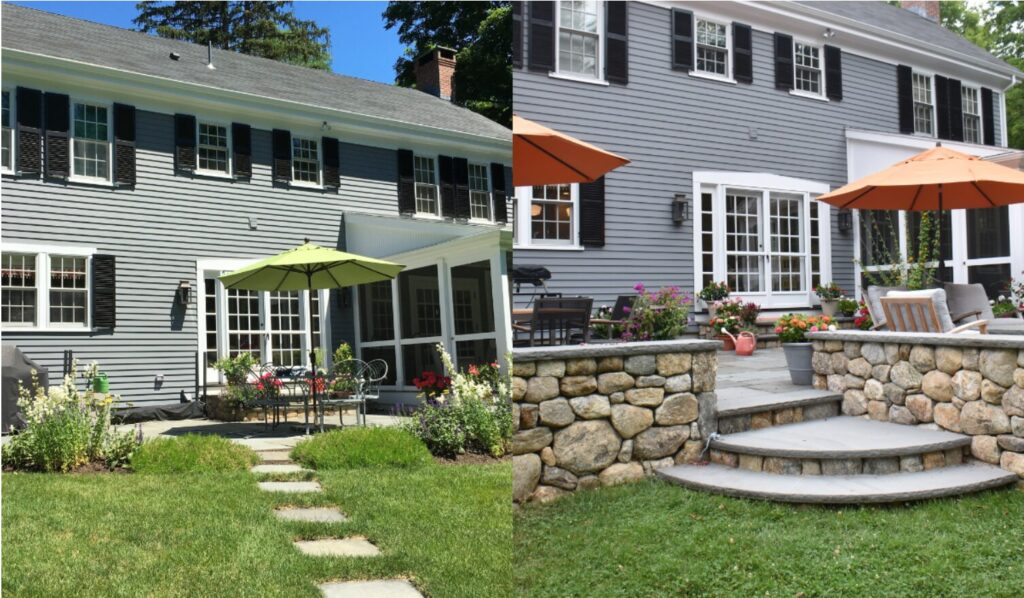
2. Old Courtyard Renovation: “Rebooting Life” on Compacted Soil
Another project had a completely different starting point: the original old courtyard had fertile soil, but after house expansion, pool construction, and frequent heavy machinery use, the soil structure was almost completely compacted and suffocated.
The solution was:
- Advance consultation with the civil engineering, stonemasonry, and pool teams to limit construction access routes, preventing the entire backyard from being turned into a “hard drive.” – For areas known to be severely disturbed, pre-design soil remediation plans, such as deep loosening, adding organic matter, introducing functional vegetation, and establishing buffer zones.
- Combined with a highly diverse mix of flowers, trees, and herbs, and subsequent follow-up maintenance, the originally “scarred” site gradually regains its structure and biological vitality.
The result is a “reborn courtyard” that simultaneously serves pollinating insects, birds, and the homeowner’s aesthetic preferences.
6. Three Cornerstones for Project Success
From these experiences, three cornerstones for the successful completion of regenerative landscape projects can be extracted:
- Solid Preliminary Survey and Planning: Including on-site investigations of soil, topography, water systems, potential obstacles, and plant resources.
- Transparent and Continuous Communication: Clearly explaining the timeline, budget boundaries, and potential risks to the homeowner, and maintaining an equal and respectful collaborative relationship with all trades.
- Pre-planned Flexibility and Contingency Plans: Accepting that “unexpected events will occur on-site,” and preparing backup plant lists, alternative procedures, and budget buffers.
The challenge of regenerative landscapes lies in the fact that they must simultaneously respond to the expectations of the land, the ecology, and people; and its value lies precisely in this—in every disturbed pit and fallen root cluster, it lays a more stable foundation for the health of a small plot of land for decades to come.