
1. Why Pair Boxwood with Companion Plants?
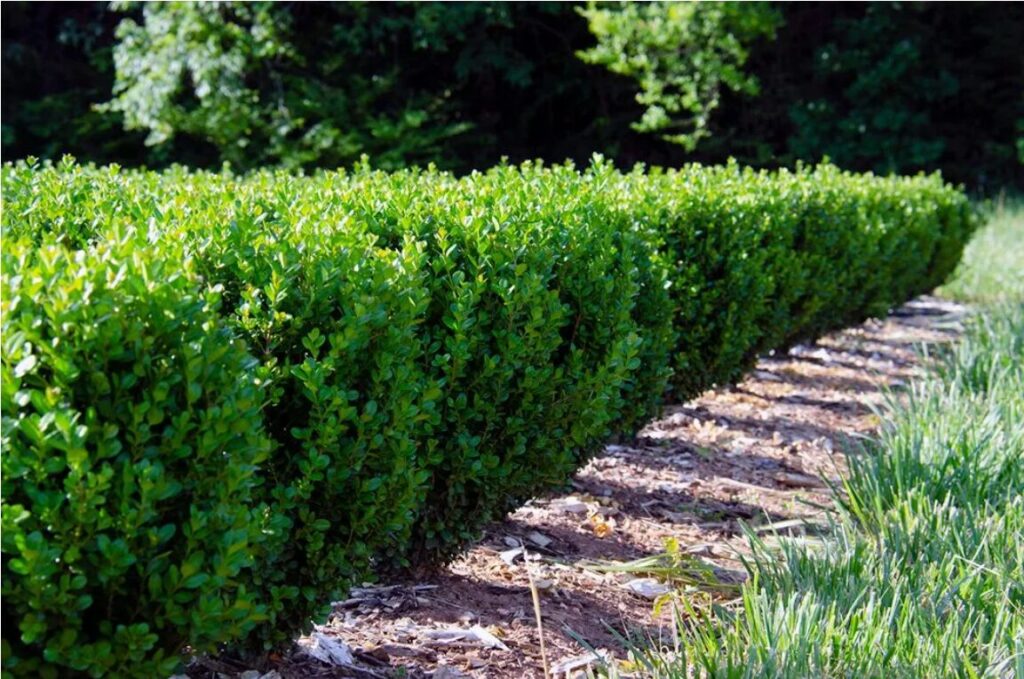
Boxwood (Buxus) is a typical “skeleton plant”: evergreen, tolerant of pruning, and can be shaped into neat hedges or geometric forms, providing structure, boundaries, and background for the garden. It is highly adaptable, tolerating a variety of light conditions from diffused to partial sun, and is not demanding in terms of soil, as long as it is well-drained.
Because boxwood itself is relatively understated and has a stable color, it is precisely because surrounding plants contrast with or echo it in terms of season, color, and texture that the garden’s sense of depth is truly “illuminated.”
2. Key Points for Boxwood Cultivation (Protect the Star Plant First)
1. Soil and Water
- Choose well-drained garden soil. A slightly acidic to slightly alkaline pH is acceptable, but avoid waterlogged and compacted soil.
- For the first one to two years after planting, keep the soil consistently moist. After the plant has established itself, continue to water appropriately during periods of high temperature or prolonged drought to prevent leaf tip burn and drop caused by prolonged drought.
2. Light and Environment
- Boxwood can tolerate full sun to partial shade, but it grows more compactly and has better leaf color in locations with 4-6 hours of direct sunlight daily, providing some light in the morning and evening but with slight shade during the peak sun hours.
- Under the combined effects of strong sunlight and cold winter winds, the leaves are prone to browning. Choose a sheltered planting location that is not exposed to direct sunlight all day in winter.
3. Nutrients, Mulching, and Pruning
- The root system is shallow and dense, and it prefers a 1-2 cm layer of organic mulch, such as bark or compost, which both retains moisture and improves soil structure.
- In the second year after planting, apply a balanced compound fertilizer or slow-release fertilizer in spring and water thoroughly to allow it to penetrate the root zone.
- Boxwood tolerates pruning well; it can be pruned into neat hedges or retain its natural, rounded shape. However, pruning should be avoided during periods of high risk of late frost to prevent frost damage to new shoots.
3. 15 Best Companion Plants for Boxwood
The table below categorizes common pairings into four groups based on their main aesthetic appeal, making it easy to use in design.
Quick Overview of Plants to Pair with Boxwood
| Plant Type | Representative Variety (Genus) | Main Aesthetic Points | Brief Description of the Pairing Effect with Boxwood |
| Spring Flowers and Bulbs | Primroses, Tulips | Early Spring Colors | Create bright color blocks against an evergreen background, adding the “first touch of spring” to the base of the hedge. | | Summer and Autumn Flowering Shrubs | Hydrangeas, Roses, Spireas | Abundant Flowers, Long Flowering Period | Break the “quietness” of boxwood, creating lush flower walls or islands. | | Texture and Autumn Colors | Japanese Maple, Miscanthus, Butterfly Bush | Leaf Color, Posture, Autumn Landscape | Adds a sense of movement and seasonal change to the neat boxwood. |
| Shade and Ground Cover | Coral Bells, Fatsia japonica, Phlox, Ferns, Zephyranthes candida, etc. | Leaf Color, Ground Cover Ability | Softens the gaps at the lower edge of the boxwood, controls weeds, and enriches the ground layer. |
4. Prelude to Spring: Flowers that “Light Up” the Foot of the Boxwood
1. Primula
Primula is suitable for forming low-lying flower beds in front of boxwood hedges:
- Early flowering, many flower colors, from delicate to vibrant, creating a strong contrast with the dark green foliage.
- Prefers partial shade and cool temperatures, perfectly suited to the environment where the light is filtered by the hedge next to the boxwood.
2. Tulips and Other Autumn-Planted Bulbs
Tulips, crocuses, hyacinths, and other autumn-planted bulbs can be “hidden” along the edge of boxwood:
- In winter, the boxwood maintains the framework, and in spring, the bulbs sprout all at once, creating a brief but intense splash of color against the green wall.
- After flowering, as the leaves gradually yellow and fade, the boxwood and surrounding perennials fill in the gaps, preventing the scene from appearing empty.
5. Summer’s Protagonist: Breaking the Stillness with Flowering Shrubs
3. Hydrangea
The combination of hydrangea and boxwood is a classic and recurring theme in many garden designs:
- The spherical or paniculate inflorescences quickly capture attention in summer, highlighting the neat, deep green “backdrop” of the boxwood.
- Suitable for planting in a row alongside a boxwood fence, or for embellishing corners, entrances, and other spatial nodes.
4. Rose (Rosa)
Rose is more like an “outgoing neighbor” to boxwood:
- Long flowering period and wide color spectrum. Choose varieties that echo the main color scheme of the building or hardscape, forming a triangular relationship with the boxwood.
- In formal gardens, boxwood can be used to outline square or circular flower beds, allowing roses to grow freely in the center; in natural-style gardens, boxwood serves as a backdrop, allowing roses to spread out more casually.
5. Spiraea
Spiraea is suitable for gardeners who prefer “clean lines” when paired with boxwood:
- It naturally grows into a neat, round mound, creating a pink and white cloud of blossoms, yet requires no complex pruning.
- It is not demanding in terms of soil, as long as it is not waterlogged for extended periods, making it highly compatible with the needs of boxwood.
6. Layers and Movement: “Painting” with Leaves and Posture
6. Japanese Maple (Acer palmatum, etc.)
Japanese maples are suitable for planting behind or beside boxwoods, creating a three-dimensional effect with varying heights:
- The leaves are delicate, and their color changes with the seasons, from a soft new green in spring to a fiery red-orange in autumn.
- Their light crowns create a striking textural contrast with the thick, dense leaf walls of the boxwood, making the garden visually appealing even when it’s not in bloom.
7. Ornamental Grasses—Miscanthus, etc.
Ornamental grasses like miscanthus are particularly eye-catching next to the “static geometry” of boxwoods:
- The slender leaves sway in the wind, softening the hard outlines of the boxwood, making the boundaries appear both clear and dynamic.
- Most ornamental grasses are drought-tolerant and can thrive in poor soil, making them ideal for filling in the gaps or areas behind boxwoods in sunny locations.
8. Buddleia (Butterfly Flower Shrub)
Buddleia shrubs seem tailor-made for a vibrant summer:
- Long spikes of flowers attract butterflies and bees, adding dynamic life to the otherwise quiet boxwood hedge.
- Can be planted along garden edges or at the end of the line of sight, creating a contrast with the shorter boxwood.
9. Thuja/Thuja (Evergreen Conifers)
When a tall, private barrier is needed, boxwood can dance alongside taller conifers:
- Tall evergreen conifers form a “curtain” in the background, while boxwood forms a “waistline” in the foreground, creating a harmonious balance and providing year-round greenery.
- Particularly suitable for multi-layered hedges along fences, driveways, or around pools, providing both visual obstruction and more visual interest than a single species.
7. Shade and Ground: A Delicate Curve Underfoot
10. Heuchera (Coral Bell)
The leaves of Heuchera resemble a paint palette, perfect for adding color to the base of boxwood:
- Colors range from lime green to burgundy and bronze, remaining striking even in partial shade.
- The plant grows low and clumps, ideal for strip planting along the base of a boxwood hedge, adding a colorful border to the otherwise plain green.
11. Shade-Proof Ground Covers—such as Fatsia japonica, Prunus armeniaca, Pachysandra, etc.
These ground cover types are suitable for areas with heavy shade where the soil under the boxwood doesn’t easily dry out:
- They quickly form an evergreen carpet, covering exposed soil and suppressing weeds.
- Most can grow under the canopy, require less light, and coexist peacefully with the shallow root system of boxwood.
12. Creeping Phlox
In cooler regions, creeping phlox can add a “springtime flower river” to the base of a boxwood hedge:
- The small pink, purple, blue, and white flowers that bloom in early spring create a thin carpet, which looks especially good against a dark green hedge.
- The plant is cold-hardy and spreads quickly, making it suitable for slopes, steps, or crevices in rocks.
13. Ferns (Lady Fern, etc.)
In damp, shady corners, ferns like the “Lady Fern” can create a quiet dialogue with boxwood:
- The delicate, feathery leaves appear particularly refined against the thick leaves of the boxwood.
- Most are shade-tolerant, tolerate moist soil, and have some disease resistance, making them suitable for creating natural-style woodland flower borders under trees or in shady corners.
14. Fragrance and Flowering Spikes – Calamintha and Salvia
These two plants pair particularly well with boxwood in sunny areas:
- Calamintha’s small, dense white flowers, combined with its refreshing fragrance, add a delicate texture to the paths along the boxwood hedges.
- Salvia, with its upright flower spikes and blue-purple and pink inflorescences creating vertical lines, is an ideal complement to the geometric forms of boxwood in summer flower borders.
8. Practical Pairing Suggestions: From Structure to Details
In actual design, boxwood and its companion plants can be arranged in four layers: “High-level framework – Mid-level main characters – Foreground embellishment – Ground cover finishing touches”:
- High-level: Japanese maple, Chinese juniper, butterfly shrubs, etc., responsible for spatial division and upper-level landscaping.
- Mid-level: Hydrangeas, roses, spirea, ornamental grasses, etc., forming the main visual focus together with boxwood.
- Foreground: Primroses, bulbous flowers, and coral bells create high-saturation color blocks for seasonal transitions.
- Ground cover and shade areas: Various evergreen ground cover plants, ferns, and creeping phlox fill gaps, control weeds, and create delicate details in the foreground.
Instead of planting everything at once, focusing limited energy on the repeated use of a few key plants allows the boxwood, the “steady protagonist,” and its companions to collectively tell the story of a garden.