
1. Grove LED Strip Light: A Plant Light Designed for the Living Room
Grove is a linear LED plant light that focuses on “doing both things right”: providing the effective light intensity needed for plant growth, and maintaining a look and craftsmanship that blends seamlessly into home décor.
The light body features a high-quality aluminum alloy shell, a solid structure, and a substantial weight. Its finely textured surface makes it feel more like a home lighting fixture than “laboratory equipment.”
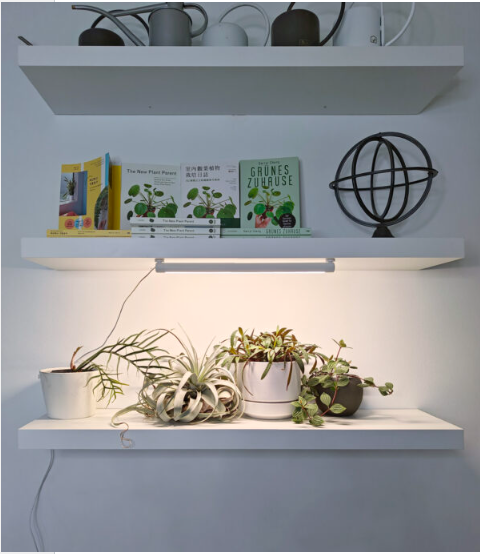
The LED beads are covered with a frosted cover, which not only conceals the exposed LED point light source but also softens and evenly distributes the light within the illumination area, making it suitable for direct installation on living room bookshelves, floating shelves, or display racks.
2. Control Method: Replacing Switches with “Tap”
1. Touch Switch and Dimming
Grove eliminates traditional buttons or toggle switches, instead employing a touch-sensitive design for the entire light tube:
- Double-tap any part of the light body to turn it on or off.
- Double-tap and hold to continuously adjust between approximately 10 brightness levels, from dim to bright or from bright to dim.
This interaction method keeps the light fixture minimalist in appearance, eliminating the need for exposed switches and knobs, and allowing for easy operation even when the light is hidden on the edge of a shelf.
2. Companion Timer: “Set and Don’t Worry”
The product comes with a wall-mounted timer that can be preset for daily on/off times. For most foliage plants, a common setting is 12–18 hours of lighting per day.
This allows users to simply select the appropriate duration based on the plant type and location to achieve “set-and-automatically cycle” daily lighting without frequent manual control. ***
3. Light Characteristics: “Usable Light Intensity” Beneath the Warm White Exterior
1. Color Temperature and Visual Sensation
Grove emits light in the “warm white” range, approximately 2500–3000K, which appears to the naked eye similar to the atmosphere of a warm-toned household table lamp or pendant light, without producing glaring blue-violet light.
For plant growth, color temperature within a reasonable range is not the decisive factor. More important than whether it’s “warm or cool” is the actual light intensity received by the plant.
2. Light Intensity Measurement and the DLI Concept
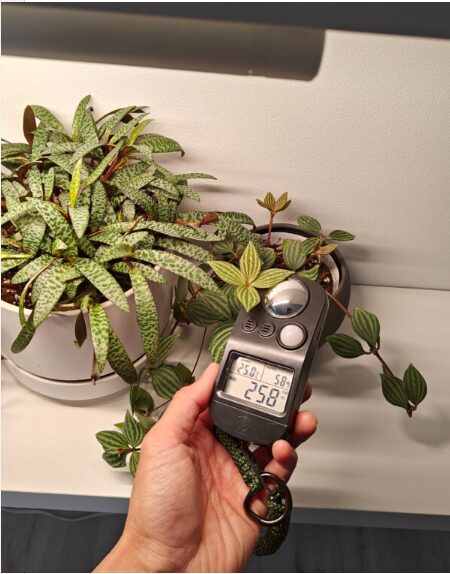
The article specifically emphasizes that when using plant lights, one should not rely solely on whether they “look bright enough,” but rather measure the actual illuminance at the leaf area, similar to knowing the temperature setting when using an oven.
- There is a good correlation between the illuminance (lux or foot-candles) of white LEDs and the plant’s usable light dose (PPFD), which can be estimated using a standard lux meter or a dedicated PAR meter.
- The author used a custom-designed LTH Meter (a device that simultaneously measures light, temperature, and humidity) to measure light intensity at different distances and locations, and calculated the Daily Photosynthetically Active Radiation (DLI) to determine whether it met the needs of different plants.
The measurement results showed that at locations closer to the light, even without setting the brightness to maximum, sufficient light intensity was provided for small succulents; the light intensity at slightly farther or sideways locations was suitable for medium to low light foliage plants.
4. Installation and Application Scenarios: One Lamp, Multiple “Light Zones”
1. Close-Range High Light: Small Succulents and High-Light Plants
When the Grove was installed in a small shelf, with the distance between the lamp and the plant controlled within approximately 30 cm, and the brightness set to high, the measured light intensity was sufficient to meet the needs of high-light plants such as succulents and light-loving cacti.
This arrangement is suitable for placing a row of small potted plants in the center of the same shelf, giving them near-direct sunlight, but without being limited by season or orientation. ### 2. Multi-Layer Lighting: Utilizing Light Intensity Gradients for Different Plants
After installing a Grove light on a suspended shelf in the living room, the area under the light will exhibit a gradually decreasing light intensity gradient from the center outwards and from near to far:
- High-light-requirement varieties can be placed in the direct light source, such as some variegated foliage plants, succulents, or compact tropical plants.
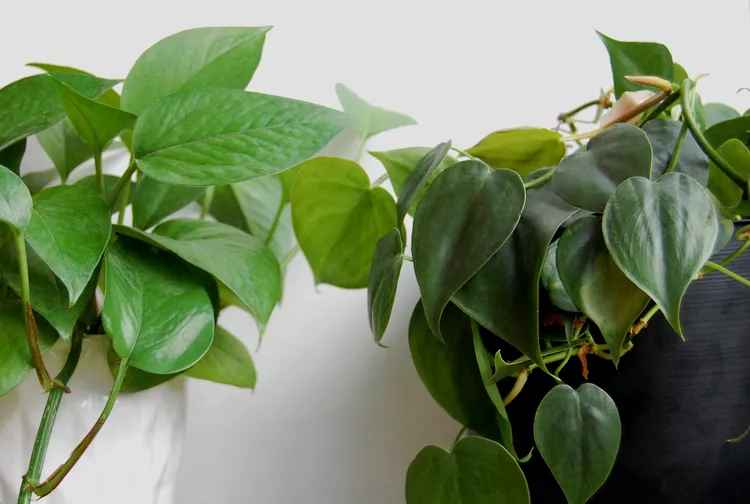
- The sides or further away are reserved for shade-tolerant indoor plants such as pothos and heart-leaf philodendron.
Based on this, the author constructed a series of “layered lighting environment” display shelves, with different plants positioned according to measured light values, making full use of the different intensity areas created by a single light source.
5. Key Points for Use: Light is Important, Distance is Even More Crucial
Measured data shows that even if the light intensity itself remains constant, a difference of just a few inches between the plant and the light source can double or even triple the light intensity received by the leaves.
Therefore, the truly crucial steps when using Grove (or any plant light) are:
- First, use a light meter or reliable reference values to understand the approximate light requirements of different plants.
- Then, fine-tune the actual light level received by each plant by adjusting the distance between the light and the plant and changing the brightness level.
This will prevent the awkward situation where “the light is expensive and very bright, but the plants are either sunburned or still lacking light.”
6. Plant Lights Designed for “Home-Style” Care
From the perspective of materials and craftsmanship, Grove is closer to a lighting product intended for long-term display in the living room, rather than a cheap supplemental light strip for short-term use.
Warm white spectrum, frosted lampshade, and minimalist design ensure that it provides the light intensity needed by plants without disrupting the overall ambiance of the room; combined with touch-sensitive dimming and a timer, it further lowers the barrier to entry, making “long-term, stable supplemental lighting” a reality.
For those who need to bring their beloved plants indoors during winter but don’t want to sacrifice the aesthetics of their living room, Grove is more like an ambient light specially formulated for plants—quietly hanging on the wall or under the shelf, it helps you extend the daylight hours after sunset.