
1. “Never Leave Bare Soil”—A Rule That Can Rewrite Your Garden
Most people believe that the success or failure of a garden depends on climate, plot, or some mysterious “gardening talent.” In fact, for those who grow vegetables and flowers, the key is a simple principle: try not to let the soil be exposed to air and sunlight for extended periods.
Bare surface means rapid water evaporation, rampant weed growth, and slow soil collapse, ultimately resulting in meager harvests from hard work. Conversely, as long as the land is always covered with plants or organic matter, water, nutrients, and life will be steadily retained.
This isn’t a difficult technique, but a “way of seeing the world”: no longer treating empty soil as normal, but as a signal that it needs immediate repair.
2. Three Major Hidden Dangers of Exposed Soil
1. Endless Watering and Weeding
Beginners are often overwhelmed by two things: endless watering and relentless weeding.
- The soil surface is exposed to sunlight and wind, causing moisture to evaporate quickly. As soon as you turn off the hose, the ground cracks again.
- The gaps between plants become a paradise for weeds, which always grow faster and more aggressively than crops.
Bare soil is like a dry sponge—thirsty and empty, unable to retain water and rejecting any seeds you plant.
2. Nutrient Loss and Soil “Hollowing Out”
Plants absorb nitrogen, potassium, calcium, and other elements from the soil—this is a natural process. The problem is that when the surface is exposed for extended periods, rainwater erosion, intense sunlight, and wind erosion rapidly deplete the soil’s organic matter and microorganisms.
At this point, adding compost and fertilizer is like pouring it into a leaky bucket—spending money while it leaks away. Over time, the soil becomes increasingly infertile, forcing the plants to rely on external nutrients to survive.
3. Low Yields and a Feeling of Futile Effort
If you water, weed, and fertilize every season, but only reap scattered harvests, you’ll naturally doubt your own abilities.
The root cause is often not a problem with technical details, but rather the soil’s lack of mulch and protection; water, nutrients, and microorganisms are mostly wasted in the air and rainwater.
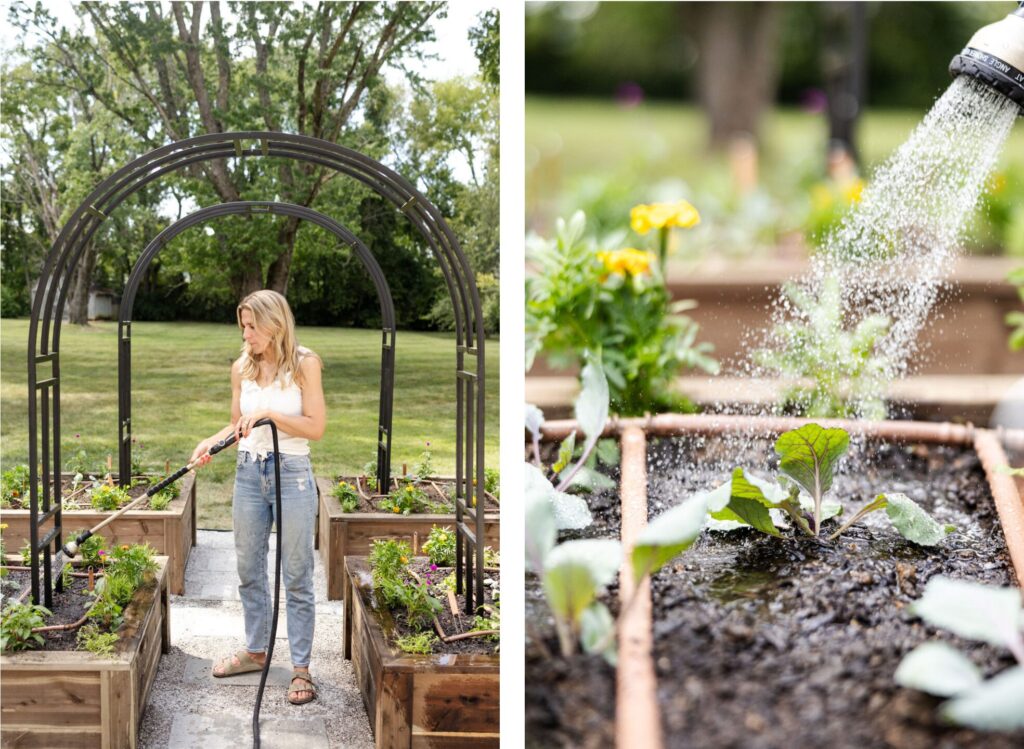
3. Learning from Nature: The Land Never Likes to Be “Naked”
Just walk into any grove, meadow, or even an untended corner, and you’ll find one thing: you’ll hardly see any large patches of bare soil.
- The ground is covered with fallen leaves, dead branches, and withered stems.
- Moss, weeds, and small shrubs crawl through the crevices.
This isn’t “chaos,” but rather nature’s most instinctive protection of the soil—any bare soil, once exposed, is quickly filled in by plants or organic matter.
Truly healthy ecosystems all follow the same rule: minimize surface exposure. Adopting this rule is often the turning point for home gardens, transforming them from labor-intensive to self-sufficient.
4. Four Ways to Put “Avoid Bare Soil” into Practice
1. Reduce Spacing, Making Plants “Living Cover”
Don’t blindly follow the most lenient spacing on labels. Plant more compactly within reasonable limits, allowing different crops to complement each other.
- Intercrop fast-growing radishes, lettuce, or arugula around slow-growing tomatoes and peppers.
- After the first-ripening crops are harvested, the main crops next to them will have grown and filled the empty spaces.
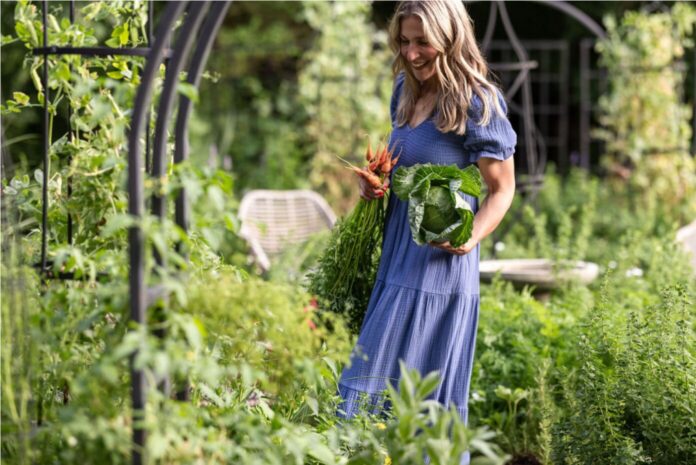
The effect of this is that the garden, viewed from above, resembles an “edible green carpet,” rather than rows of seedlings interspersed with large areas of bare soil.
2. Use Compost as the “Sole Covering”
In raised beds or vegetable plots, there’s no need to mix in mulch like sawdust or bark. You can directly cover the surface with a layer of finely crushed, well-rotted compost:
- It blocks sunlight and wind, slowing down moisture evaporation.
- Every time you water or it rains, some nutrients seep into the root zone with the water.
This is like giving the soil a warm and self-sustaining coat, keeping the surface soft and resilient.
3. Continuous Planting: One Crop Finishes, Another Begins Immediately
A plot of land should not be left empty for long.
- When a crop season ends, promptly remove the old plants and add a small amount of compost.
- Immediately sow the seeds for the next crop, even if it’s just temporary fast-growing vegetables, herbs, or green manure.
This way, the soil never has a chance to be completely exposed, the microbial community continues to function, and fertility circulates within the system, rather than being stolen by wind and rain.
4. Introducing “Short Companions”: Living Ground Cover and Edge Plants
Around the edges of your vegetable garden, along paths, and at the base of supports, plant low-growing, spreading plants such as thyme, oregano, creeping rosemary, and strawberries.
- They help cover the soil and keep weeds out.
- They also provide spices, fruit, or ornamental value.
This “food-oriented” ground cover layer makes your garden both efficient and beautiful.
5. Invisible Changes: Water, Nutrients, and Life Begin to “Stay”
After you’ve truly practiced “no bare soil” for a while, almost all key indicators will subtly change:
- Watering frequency decreases—the soil acts like a buffer, slowly releasing moisture.
- Weeds significantly decrease—without open space, there’s no opportunity for roots to take hold.
- The soil becomes loose and elastic; turning over the surface reveals abundant roots and small organisms.
- Plants are healthier overall, with more stable yields, and no longer rely on large amounts of added fertilizer.
This isn’t some trendy trick, but a return to the rhythm of nature: acknowledging that the soil is a living system that needs to be sheltered and nourished, not left to rot in the scorching sun.
6. When You Can Still See the Soil, the Land is Actually Crying for Help
Make yourself a small promise: During a growing season, try to keep each vegetable bed “without bare soil” for six weeks.
Whenever you look down and see large areas of bare soil, take it as a distress signal from your garden: it needs compost, seeds, and a new layer of green to protect it.
Over time, you’ll find that what truly changes the fate of your garden isn’t magical fertilizer or rare luck, but this whispered mantra—Don’t leave the ground bare.